
BIRD FLU
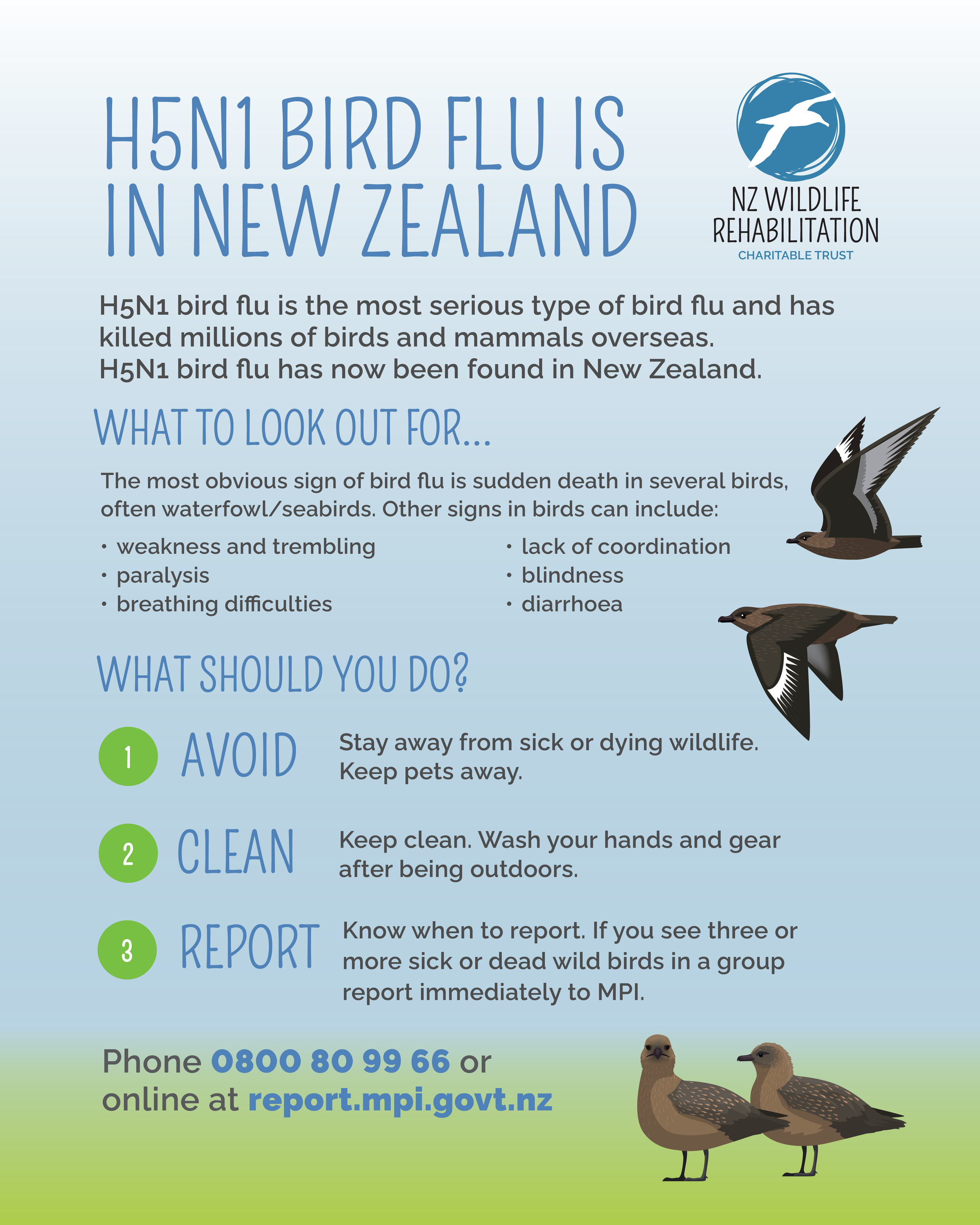
Highly Pathogenic Avian Influenza (HPAI - H5N1) has been confirmed in NZ. A wild skua in the Wellington region and a harrier/kahu in the Wairarapa have tested positive for H5N1 avian influenza.
We are still cautiously rehabbing at this stage, but this may change in the future. We are guided by MPI, DOC and WReNNZ. As the situation develops, we may be required to limit or stop taking in patients. If you message us about an injured/sick bird, we will be asking more questions than usual and ideally will ask you to send a video of the bird through Facebook messenger or email, particularly if that species is considered to be at higher risk of HPAI e.g. giant petrels, skua, swans ducks etc. These questions/images will help us determine the safest way to proceed.
For your own safety, please make yourself familiar with bird flu and its symptoms by visiting the MPI website: https://www.mpi.govt.nz/biosecurity-in-nz/dont-let-bird-flu-take-flight?
If you find an injured native bird, please approach with caution and do not touch the bird, take a photo or video of the bird and message us, please wait for our reply.
Once H5N1 is widespread, wildlife populations will be under immense survival pressure from HPAI, alongside existing human related threats. Please keep away from vulnerable wildlife reserves and nesting sites, give wildlife lots of space to prevent additional stress in unwell animals.
Cats and dogs can contract the virus by hunting or eating infected wild birds. Bird flu poses a significant threat to cats, containing cats indoors and leashing dogs on walks can prevent them from interacting with sick or deceased wild birds.
Pet bird owners, backyard flock owners, and commercial poultry farms need to maintain rigorous biosecurity measures. You can prevent wild birds from entering coops, feeders and water sources by using netting or shade cloth. Keep caged pet birds indoors, or ensure wild birds cannot land or defecate on aviaries. Use dedicated footwear and clothing when entering poultry areas and disinfect equipment regularly. Look for sudden increases in mortality, respiratory distress, swelling, or drastic drops in egg production.
Remember if in doubt, check it out. Call MPI 0800 80 99 66